
Dear Reader,
If you come to follow this website and my writing, you will quickly learn that I am a massive football fan. A fan of playing football. A fan of watching football. A fan of talking about the football I’ve played and watched.
It feels fitting, therefore, that my opening musing should be about the ‘beautiful game’. Specifically, a preview of Euro 2024, the quadrennial tournament that invites the continent’s top footballing nations to complete for the title of European champions, which – much to my excitement – kicks off tomorrow evening!
To begin this musing, I wish to offer some observations about the relationship between classics, football, and pop. Then, I’ll ask some questions, which I hope will inform my/your/our spectatorship of the Euros and play a part in my future research and writing too.
An Observation: there are many and various marks of Greco-Roman language and culture in football
The first two examples that came to my mind hailed from the Premier League and Europe.
i) The Latin mottos belonging to…
- Everton (Nil Satis Nisi Optimum, “Nothing but the Best”)
- Man City (Superbia in Proelio, “Pride in Battle”)
- Tottenham (Audere est Facere, “To Dare is to Do”)
ii) The classically inspired names and emblems of
- AFC Ajax, named after the famous warrior Ajax – tallest and strongest of the Greeks in their mythic victory against Troy;
- Atalanta BC, called after the Arcadian warrior and heroine, famed for her participation in the Calydonian Boar Hunt;
- And AS Roma, who sport the traditional colours (crimson and gold) of Rome, and have Romulus and Remus, Rome’s mythic founders, suckling the she-wolf on their club crest.

A Connection: References to classical material in football are likely given the prominence of sport in Greco-Roman culture
The ancient Greek origins of the modern Olympic games is the most famous and celebrated example of the links between classical and contemporary sport – a topic I plan to muse upon during the Paris games in August.
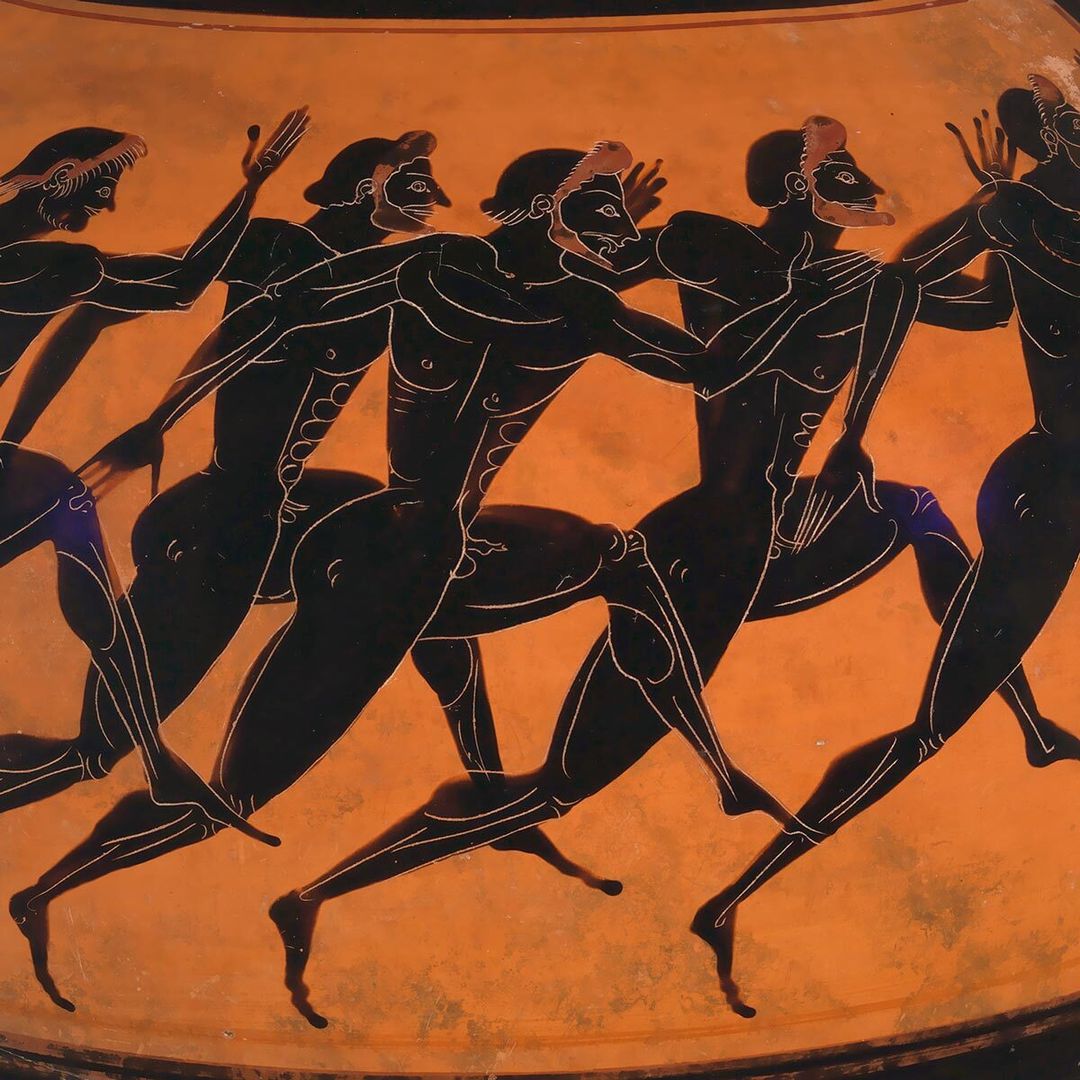
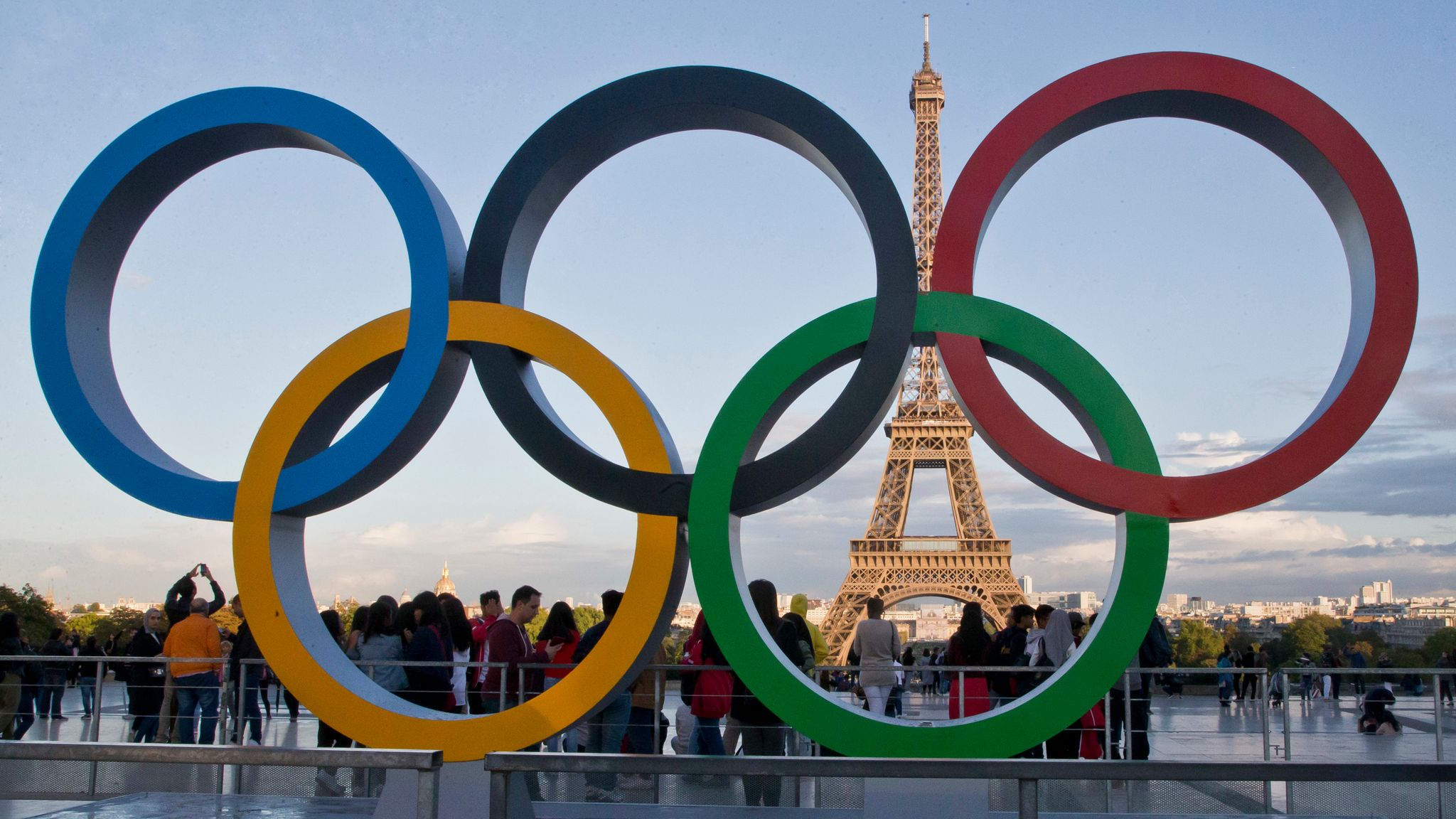
The connection between ancient and modern sporting performance is a dynamic, significant, and wide-ranging. Its exploration will be integral to my proposed doctoral project.
A Pop Classicism: in the twenty first century, the relationship between football and the ancient world is often, and perhaps uniquely, informed/ inspired / mediated by popular cultureRidley Scott’s Gladiator (2000) is a prime example of this, often referenced in the footballing world. If you are unfamiliar with the film, this clip should give you a good flavour of its protagonist, themes and atmosphere.
In the Premier League 2023/24 season alone, three citations of Gladiator by prominent players/clubs/managers stand out:
- On 3 September, Arsenal scored two last minute winners against Man United to win 3-1. Declan Rice, one of the goal scorers, captions his post-match Instagram… ‘Are You Not Entertained.’
- On 1 February, Man United beat Wolves 4-3, with a 97th minute winner coming from teenager Kobbie Mainoo. Their post-match tweet? Same caption: ‘Are You Not Entertained?
- Interviewed by Goal, manager Mikel Arteta chose Gladiator as the film he would watch for the rest of his life. Later, in May, interviewed by BBC 5 Live radio, he discussed the film and its impact upon him when in conversation about Arsenal’s title-race against Man City.
Euro 2024 – A Pop Classicist’s Preview
During Euro 2020, Italy defenders Bonucci and Chiellini earned the name of ‘gladiators’, who would come to taunt England with the chant ‘It’s coming Rome!’ upon their victory at Wembley. A testament to Italy’s footballing and cultural heritage.

What moments of classical reception, then, might lie in wait for Euro 2024?
Watching the tournament unfold, if references to Greece and Rome occur, I wonder if we might be guided by the following questions…
- What is the legacy of the classical world on modern football? In turn, how does modern football affect our understanding and impressions of ancient Greece and Rome?
- Might footballers at the Euro 2024 – as elite sportspeople and performers on the European stage – be in a unique position to relate to, and refer to, ancient sporting figures and cultures (e.g. athletes, heroes, gladiators etc.)?
***
Thank you very much for reading my first musing! If you enjoyed this piece, please consider making a donation to support my doctoral research and/or sharing my work with your family/friends/followers.
Comments
From Atalanta to Arteta, I find every instance of classical reception I have listed in this piece so absorbing that they each may earn a blog post of their own! And there are, of course, very many other examples of classical reception in sports, which I would love to explore and share with you. If any ideas come to your mind, or you have any thoughts on the questions I have posed – please feel free to leave suggestions in the comments and I’ll endeavour to respond to you. Gratias tibi ago
– Tilda Rose
 The Pop Classicist
Leave a comment